



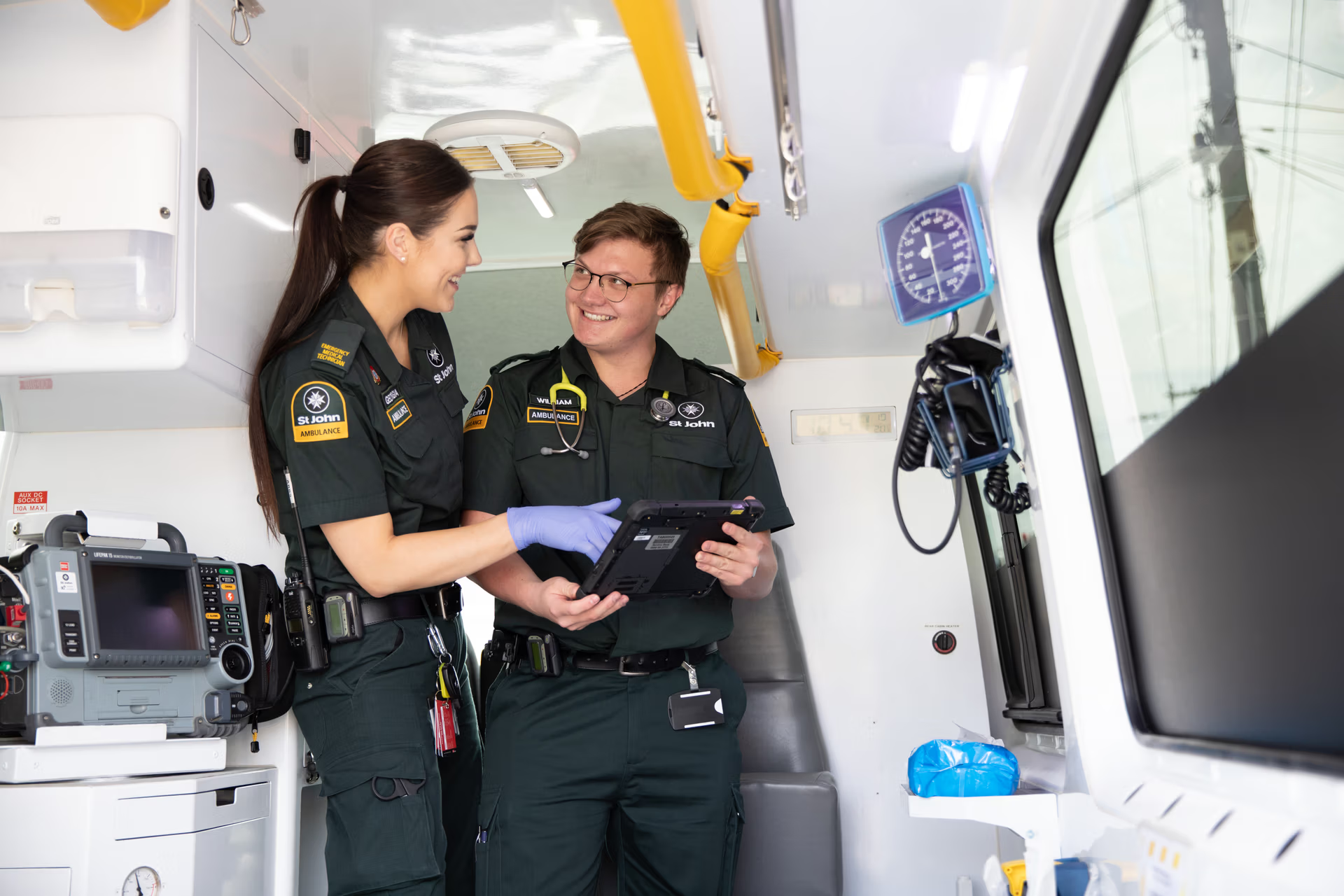
East Auckland residents could receive faster treatment and avoid some trips to hospital emergency departments under Government plans to give paramedics the authority to prescribe medicines.
MP Simeon Brown announced the proposed reforms this week, saying they would allow suitably qualified paramedics to provide more complete care in the community.
The changes would enable paramedics to become designated prescribers under the Medicines Act 1981, allowing them to prescribe a range of approved medicines within their scope of practice.
Brown said the move recognises the growing role paramedics play in healthcare delivery beyond traditional emergency callouts.
“Paramedics are highly skilled health professionals who provide care in emergency situations and some of the most challenging circumstances,” he said.
The Minister said paramedics are increasingly treating patients in their homes, aged-care facilities and community settings, rather than simply transporting them to hospital.
Currently, paramedics can administer certain medicines under standing orders from authorised prescribers but cannot prescribe medications themselves.
Brown said the change would reduce administrative barriers and help patients access treatment sooner.
For East Auckland communities, where demand on healthcare services continues to grow alongside population increases, the reforms could help reduce pressure on busy emergency departments and improve access to care closer to home.
Under the proposal, qualified paramedics would be able to prescribe from an approved list of medicines, potentially including treatments for common infections, asthma, diabetes and other routine conditions.
The announcement has been welcomed by Hato Hone St John, which says the change represents an important step forward for the paramedic profession and could improve access to timely healthcare for New Zealanders.
Hato Hone St John Deputy Chief Executive – Clinical Services Jon Moores said paramedics already provide care in communities across the country around the clock.
“Enabling appropriately trained paramedics to prescribe medicines has the potential to improve access to treatment, particularly for people who face barriers to accessing primary care or urgent healthcare services,” he said.
The ambulance service said paramedic prescribing could reduce delays in treatment, improve patient experience and support a more integrated and responsive health system.
However, Hato Hone St John also cautioned that successful implementation would require investment in workforce capability, medicines management, clinical governance and patient safeguards.
“It is important that robust clinical governance, training, prescribing frameworks and patient safeguards are in place to ensure prescribing is used appropriately and safely,” Moores said.
The organisation also wants assurances that the change will not encourage people to use emergency ambulance services as an alternative to visiting their GP or nurse practitioner when primary care services are available.
“We would like to have reassurance that this change will not result in increased demand on our ambulance service and call centres,” Moores said.
Hato Hone St John noted that prescribing powers alone may not fully solve access-to-care challenges, particularly in rural communities where patients can still face difficulties obtaining medicines from a pharmacy.
The organisation said it sees the greatest benefit in prescribing powers being used by Extended Care Paramedics working with patients who have low-acuity urgent health needs, those receiving palliative care, and people living in underserved communities.
The Ministry of Health has begun consulting on which medicines paramedics may be authorised to prescribe and is developing the regulations required to implement the changes.
Training programmes and new professional standards will also be developed by the Paramedic Council to ensure prescribing is carried out safely and appropriately.
Brown said the initiative forms part of the Government’s wider effort to strengthen frontline healthcare services and make better use of New Zealand’s skilled health workforce.
“These changes will help reduce pressure on emergency departments and hospitals, support more care in the community, and ensure patients receive the treatment they need sooner,” he said.
About The Author


